


The History of Pet Portraits: From Earliest Examples to Present Day
We explore the fascinating history of pet portraits, tracing their evolution from the earliest known examples to the present day. From ancient Egyptian depictions of cats to Renaissance paintings featuring dogs, pet portraits have been celebrated throughout history as a way to honour and immortalise beloved animal companions.
Throughout the centuries, pet portraits have undergone significant changes in style and technique. From traditional oil paintings to modern digital illustrations, artists have experimented with a variety of mediums and styles to capture the unique personalities and characteristics of their subjects. This article will delve into the various styles and techniques used throughout history, offering a comprehensive look at the evolution of pet portraiture.
Early Examples
Humans have been creating art for thousands of years, and pets have been a part of our lives for just as long. It’s no surprise that pet portraits have been around for a long time as well. In fact, some of the earliest known examples of pet portraits date back to ancient times.
So far, the oldest animal artwork unearthed date back roughly 19,000 years. These paintings, discovered in caverns in Lascaux, Southern France, depict animals in around 600 separate pieces of work. While these paintings do not represent the animals as domestic or as pets, they are the oldest paintings of animals in general, reflecting their human counterparts’ interest in them.
The first depictions of domesticated animals date back to Babylonia over 5,500 years ago, in 3500 BC. The found paintings depict goats and horses that appear to belong to people, who are also shown in the paintings.
Egypt
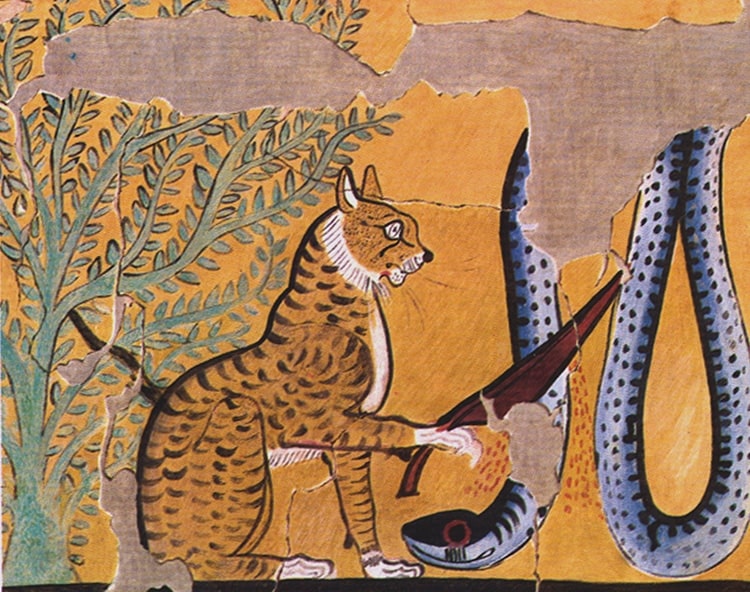
Domestic cats first appeared in artwork a few hundred years later, in the Ancient Egyptian era, where kings kept them as pets. Only the Pharaoh could possess a cat, although the Egyptian people adored the feline, which was represented in numerous Egyptian works of art.
Greece
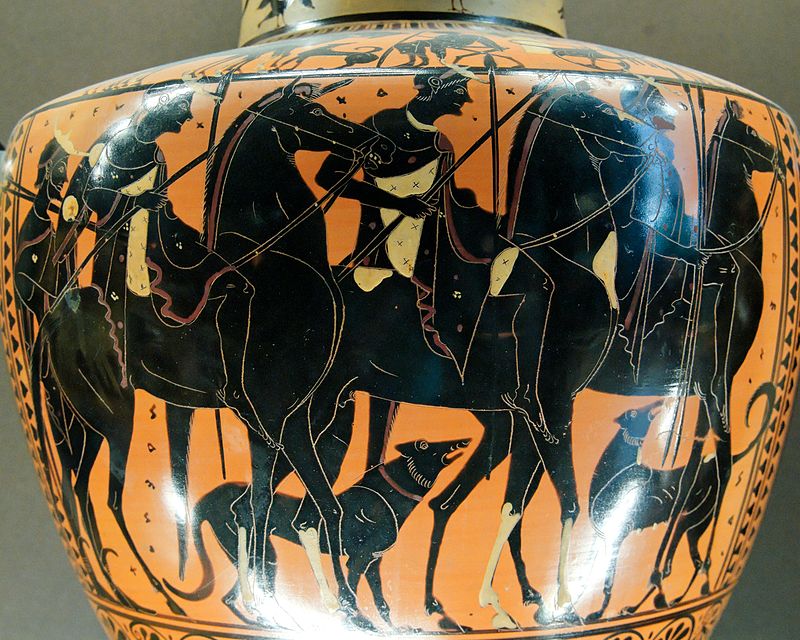
Around 800 BC, Greeks showed their affection for dogs. There are hundreds of sculptures, mosaics, pieces of pottery, and other works of art that depict domesticated dogs. Dogs were also shown in various pieces of art from the Roman Empire during this time period, and it is said that the Romans were the first to begin caring for their dogs rather than leaving them to fend for themselves.
Roman Empire
During the Roman Empire, people often kept dogs as pets and hunting companions. It’s no surprise, then, that dogs were a popular subject for art. Many Roman mosaics and frescoes depict dogs, often in hunting scenes. Some of these dogs are depicted wearing collars, suggesting that they were domesticated pets rather than wild animals.

Cats were also kept as pets during the Roman Empire, although they were not as popular as dogs. There are a few examples of cat mosaics and frescoes from this time period, but they are much less common than dog depictions.
One of the earliest known examples of a pet portrait from the Roman Empire is a sculpture of a dog that dates back to the 1st century AD. The dog is depicted lying down, and its collar is inscribed with the name “Margarita.” This suggests that the dog was a beloved pet, rather than a working animal.
Overall, pet portraits during the Roman Empire were relatively rare, but they do provide us with a glimpse into the lives of the people who lived during this time period.
Middle Ages
Dogs were mostly employed as hunting aids throughout the Middle Ages, however certain noblewomen did keep dogs as companion companions, as seen by paintings from the time.
Asia
Cats were commonly depicted in Asian artwork throughout the 1700s, as seen by the works of Japanese, Chinese, Korean, and Indian painters.
Art History
Pet portraits have been a part of art history for centuries. One of the earliest known examples of pet portraiture is a painting by the Italian Renaissance artist Titian. His painting, “Portrait of a Lady,” depicts a woman with a small dog at her side. This painting is believed to date back to the 16th century.
During the Renaissance period, it became more common for royalty and upper-classmen to have their portraits made. Many of these portraits included a dog at their side or on their lap, as it was becoming more common to have a dog as a companion and to document that relationship through art.
Titian’s painting is an excellent example of the evolution of pet portraits. The dog in the painting is not the central focus, but rather a small detail that adds to the overall composition of the piece. As pet portraits became more popular, dogs and other animals became the central focus of the painting.
In the 18th century, pet portraits became more popular among the middle class. As a result, the style of pet portraiture changed. Instead of the formal and grandiose portraits of the aristocracy, portraits of pets became more informal and playful. This change in style is evident in the works of artists such as Sir Edwin Landseer, who is famous for his portraits of dogs.
Overall, pet portraits have a long and rich history in art. From the earliest examples by Titian to the modern-day portraits of beloved pets, these paintings offer a glimpse into the relationship between humans and their animal companions.
Evolution of Pet Portraits
Pet portraits have been around for centuries, dating back to ancient times. In these early depictions, pets were often portrayed as symbols of power, status, or religious significance. As art and technology evolved, so did the style and purpose of pet portraits.
Changing Styles
During the Renaissance period, pets were often depicted alongside their owners in family portraits. These portraits were highly detailed and realistic, capturing the likeness of both the human and animal subjects. In the 18th and 19th centuries, pet portraits became more popular as standalone works of art. Artists began to focus more on the personality and individuality of the animal, rather than just its physical appearance.
In the Victorian era, photography became more accessible, and pet portraits were taken more frequently. These portraits often featured the pet with its owner, or in a posed setting. With the advent of colour photography, pet portraits became even more lifelike and vibrant.
In recent years, pet portraits have taken on new forms, with digital art and caricatures becoming popular options. Many pet owners commission custom portraits of their furry friends, either as a way to celebrate their beloved pets or as a unique piece of home decor.
Overall, the evolution of pet portraits reflects the changing attitudes towards pets and their place in society. From symbols of power to cherished family members, pets have always held a special place in our hearts, and pet portraits capture that love and affection for generations to come.
Modern Pet Photography
In recent years, pet photography has become increasingly popular, and many professional photographers specialize in capturing stunning images of pets. Modern pet photography typically involves the use of high-quality cameras, specialized lenses, and advanced editing software to create stunning portraits of animals.
Equipment
One of the most important aspects of modern pet photography is the camera equipment used. Many professional pet photographers use high-end cameras such as the Canon EOS 5D Mark IV or the Nikon D850, which offer excellent image quality and advanced features such as fast autofocus and high-speed continuous shooting.
Camera
In addition to high-quality cameras, many pet photographers also use specialized lenses to capture stunning images of animals. For example, a telephoto lens can be used to capture close-up shots of pets, while a wide-angle lens can be used to capture sweeping landscapes or group shots.
Film
While digital cameras are the most common type of camera used in modern pet photography, some photographers still prefer to use film cameras for their unique aesthetic qualities. Film cameras can produce stunning, high-quality images with a unique character and depth that is difficult to replicate with digital cameras.
Websites
Many pet photographers also use websites and social media platforms to showcase their work and connect with potential clients. Websites such as Instagram and Facebook allow pet photographers to share their images with a wider audience and build a following of fans and supporters.
Overall, modern pet photography has become an increasingly popular and respected art form, with many talented photographers specializing in capturing stunning images of pets. Whether you are looking to capture a beautiful portrait of your own pet or are interested in pursuing a career in pet photography, there are many resources available to help you get started.